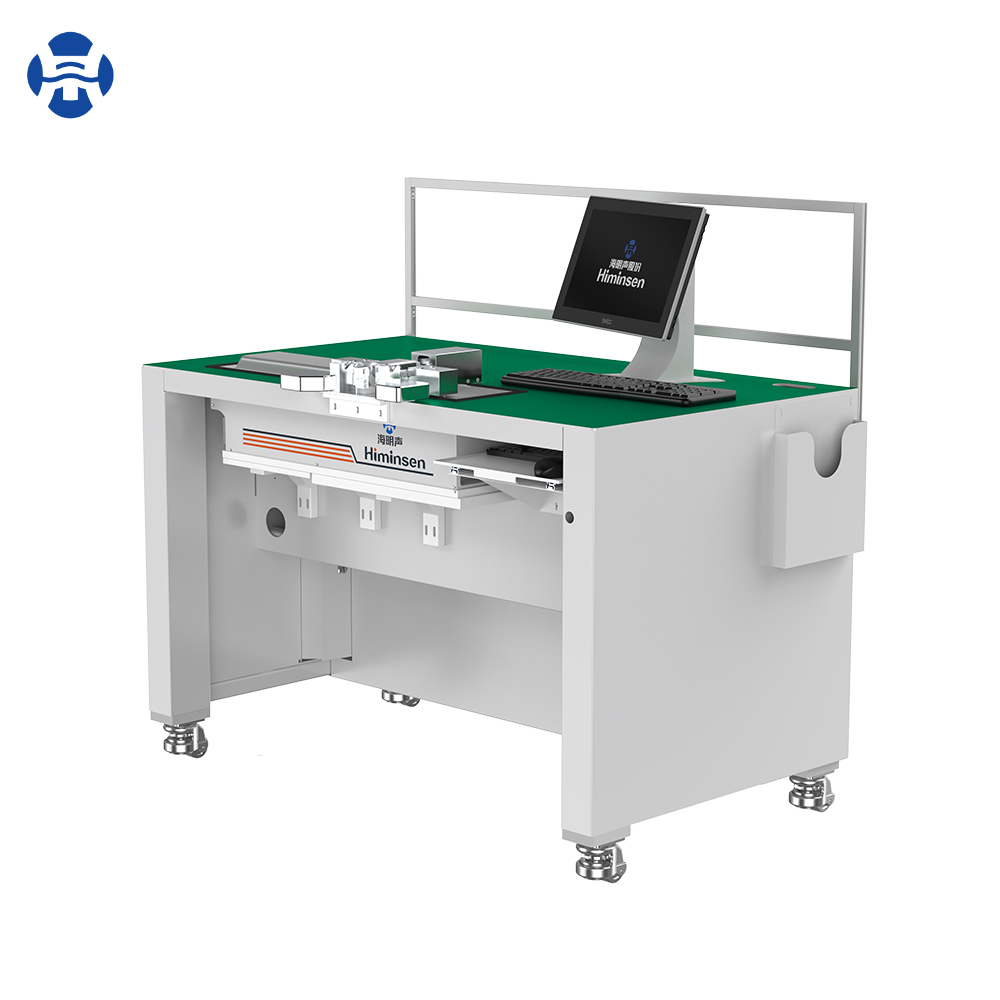
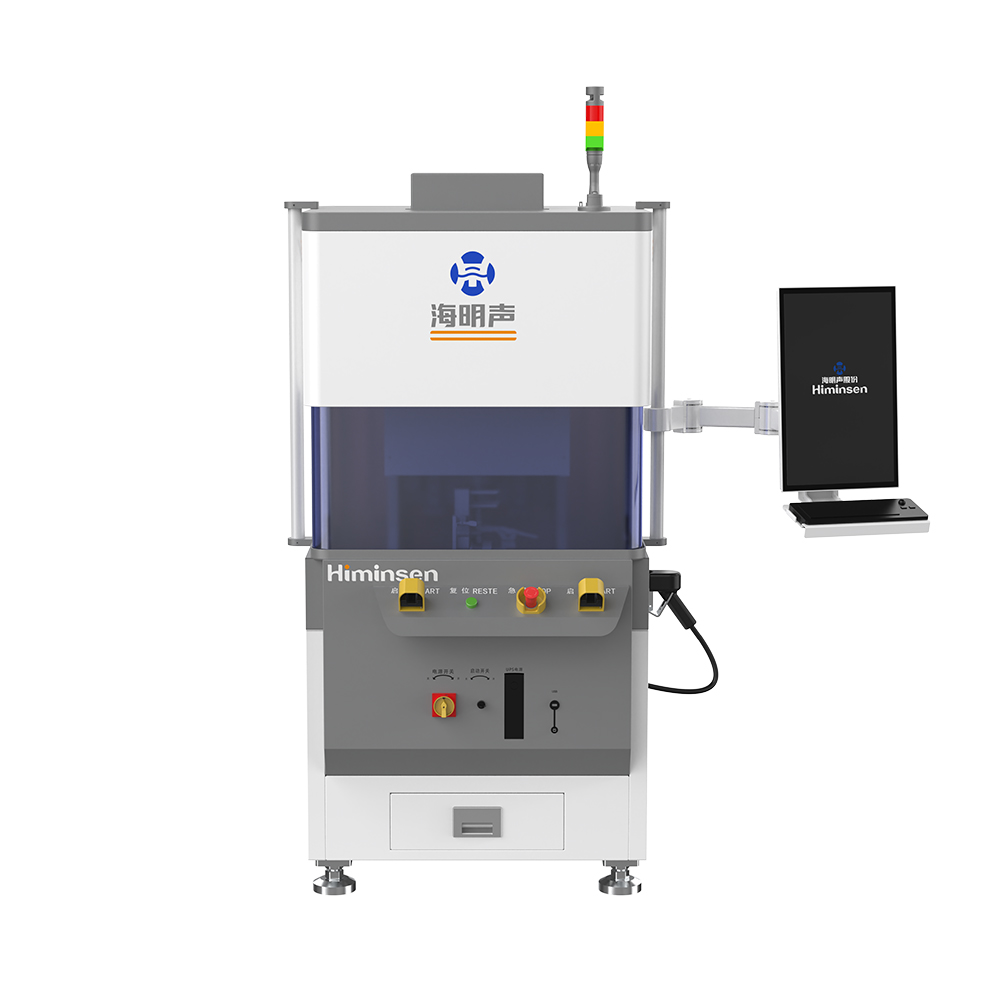
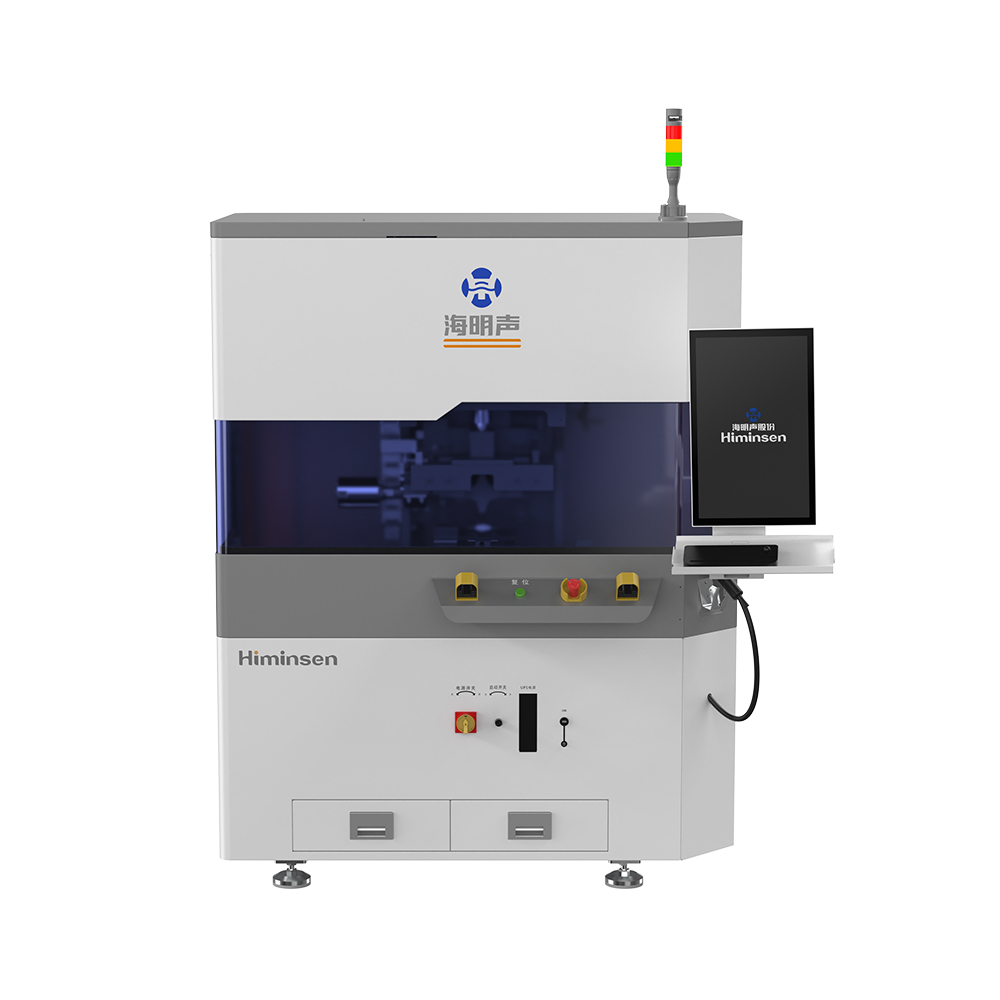
In fields with stringent requirements for connection reliability such as medical devices, new energy vehicles, and aerospace, the stability of wire harness welding directly determines the operational safety and service life of equipment. Traditional welding technologies often face problems like cold solder joints, oxidation, and insufficient mechanical strength. However, Himinsen’s ultrasonic wire harness welding technology, with its core advantages of “no open flame, low damage, and high consistency”, has become a key solution to address the pain points of high-end industrial connections. This article will comprehensively analyze how this technology builds a safer and more efficient wire harness connection system for global customers from four dimensions: technical principles, industry-adapted scenarios, core advantages, and customer value.
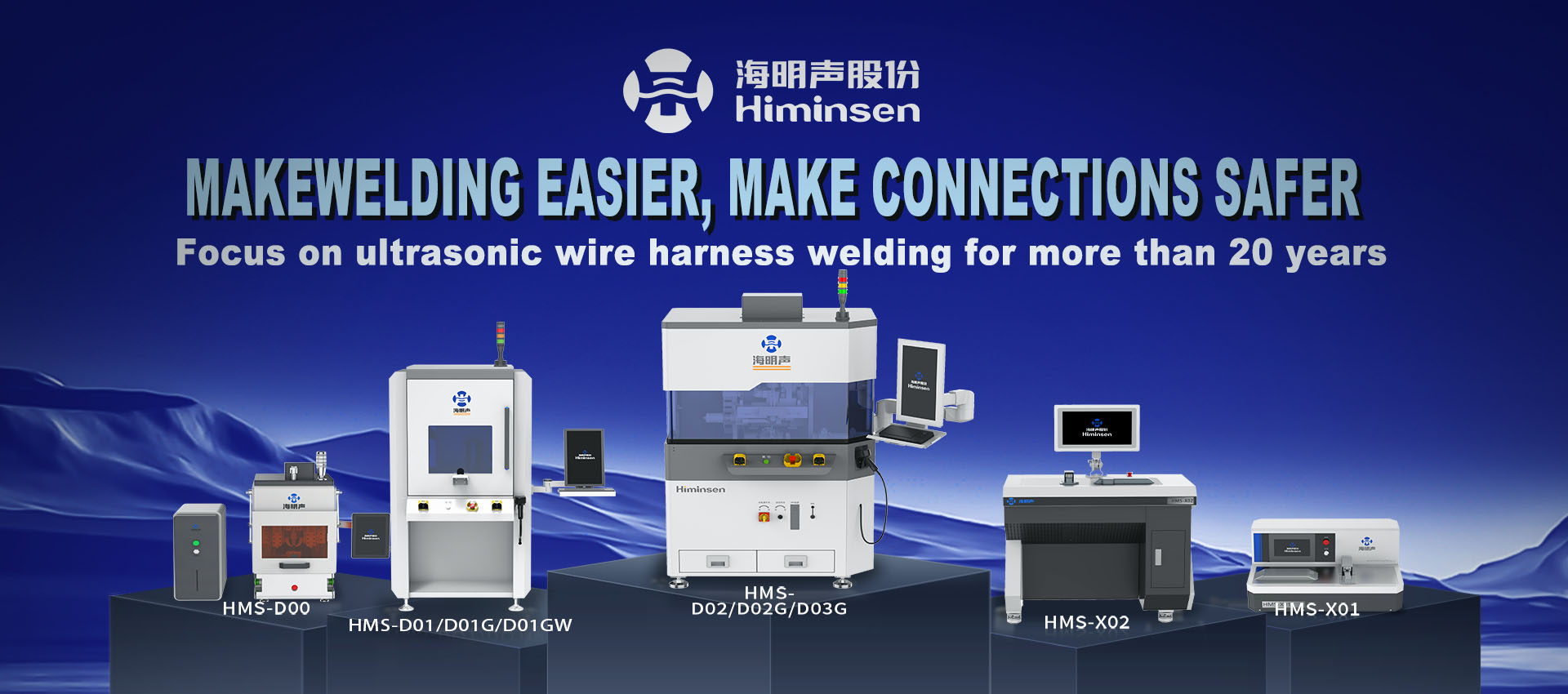
Himinsen Ultrasonic Wire Harness Welding machine
Technical Core: Why Can Ultrasonic Welding Break Through the Limitations of Traditional Connections?
The core of ultrasonic wire harness welding technology is to generate plastic deformation and molecular diffusion at the contact surface of metal wire harnesses through high-frequency mechanical vibration (usually 20-70kHz), achieving solid-state connection without external heat sources. Compared with traditional soldering and crimping processes, Himinsen’s technical solution achieves breakthroughs in three dimensions:
1.1 Welding Stability: From “Manual Dependence” to “Digital Control”
The quality of traditional welding is highly dependent on the experience of operators. Himinsen controls the welding parameter errors within ±0.1kHz (frequency) and ±0.2N (pressure) through the intelligent frequency tracking system and pressure closed-loop control technology. Each device is equipped with a real-time monitoring module that can record 12 key data during the welding process, such as amplitude, pressure, and time, and generate traceable quality reports. This feature endows it with inherent advantages in fields with high compliance requirements such as medical devices (e.g., ventilator wire harnesses) and aerospace.
1.2 Material Compatibility: Covering the Needs of Multi-Specification and Multi-Material Wire Harnesses
Targeting common materials in industrial scenarios such as copper, aluminum, and tinned wires, as well as wire harness specifications ranging from 0.01 to 10mm², Himinsen has developed customized welding heads and tooling fixtures:
- For thin-diameter wire harnesses (e.g., microcurrent transmission wires in medical devices), titanium alloy micro-welding heads are adopted to avoid wire harness breakage during welding;
- For oxidation-prone materials like aluminum wires, the ultrasonic vibration breaks the oxide film without the need for additional flux, reducing the risk of corrosion at connection points;
- It supports parallel welding of multi-strand wire harnesses (up to 30 strands can be welded simultaneously), and the cross-sectional area of the welded joint is reduced by 30%, making it suitable for space-constrained scenarios such as new energy vehicle battery packs.
1.3 Balance Between Safety and Efficiency: Meeting the Requirements of High-Beat Production
Ultrasonic welding does not require high-temperature heating, and the temperature of the wire harness insulation layer during welding is below 80℃, fundamentally avoiding the “thermal damage” problem of traditional welding. At the same time, the single welding cycle can be shortened to 0.5-3 seconds. Combined with Himinsen’s automated loading and unloading module, it can achieve stable welding of more than 3,000 times per hour. This efficiency has been verified by the production line of a leading new energy vehicle manufacturer. Compared with the traditional crimping process, the production efficiency is increased by 40%, and the defect rate is reduced from 1.2% to 0.03%.
2.1 R&D Strength: Driven by Both Patents and Industry-University-Research Cooperation
- Technical Patents: Accumulated 18 patents related to ultrasonic welding, among which 3 patents such as “adaptive frequency tracking algorithm” and “multi-material compatible welding head design” are industry-first, solving the problem of “difficult material adaptation” in traditional welding;
- Industry-University-Research Cooperation: Co-established the “Ultrasonic Connection Technology Joint Laboratory” with the School of Materials Science and Engineering of Shanghai Jiao Tong University to conduct pre-research on connection technologies for extreme scenarios such as aerospace and deep-sea equipment. Currently, the wire harness welding technology verification under 1000-meter deep-sea water pressure has been completed;
- Standard Participation: Participated in the formulation of “Technical Requirements for Ultrasonic Welding of Industrial Wire Harnesses” (GB/T XXXXX-2025), becoming one of the core drafting units of industry technical standards.
2.2 Production and Quality Control: Global Layout Ensures Delivery Capacity
- Manufacturing System: Has three major production bases in China (Suzhou), Germany (Munich), and Japan (Nagoya), equipped with ISO 9001/14001 dual-system certified production lines, enabling “local production and rapid delivery” – the delivery cycle for European customer orders can be shortened to 7 days at the shortest;
- Quality Inspection: Each device undergoes 1000 consecutive welding tests, high-low temperature cycle tests (-40℃~85℃), and electromagnetic compatibility tests (EMC Class B) before leaving the factory to ensure stability under different working conditions;
- Supply Chain Guarantee: Core components (such as ultrasonic transducers and servo motors) adopt imported brands (Swiss Branson, Japanese Yaskawa), and a 90-day inventory early warning mechanism is established to avoid delivery impacts caused by supply chain fluctuations.
2.3 Service System: From Solution Design to Lifelong Support
- Pre-Consultation: Provides free “wire harness connection feasibility assessment”, and outputs customized welding solutions and prototype test reports by simulating customer usage scenarios (such as current, temperature, vibration frequency);
- On-Site Support: After equipment delivery, dispatches technical engineers to conduct on-site installation, commissioning, and operation training (covering operators and maintenance personnel) to ensure rapid production line commissioning;
- Lifelong Service: Customers who purchase equipment can enjoy lifelong technical support, including software upgrades (2 free updates per year), rapid spare parts supply (5 global spare parts centers, delivery within 48 hours), and regular on-site inspections (1 free maintenance per year).
Three Reasons to Choose Himinsen: More Than “Welding Equipment”, But a “Connection Safety Partner”
- Compliance Guarantee: All solutions have passed authoritative certifications corresponding to the industry (such as medical ISO 13485, automotive IATF 16949, aerospace AS9100), helping customers quickly pass the supplier audits of downstream manufacturers;
- Full-Life Cycle Cost Optimization: Although the initial investment of the equipment is higher than that of traditional welding solutions, in the long run, it can reduce maintenance costs by 50% (no wearing parts replacement) and reduce defective product rework costs by 80%, with an average return on investment period of 1.5 years;
- Technical Forward-Looking: Targeting the future industrial needs of “higher integration” and “more extreme environments”, Himinsen has launched the R&D of the next-generation ultrasonic welding technology (such as laser-ultrasonic hybrid welding, AI adaptive control), ensuring that customers’ connection solutions remain leading in the long term.
Whether it is the “life safety line” of medical devices or the “power transmission line” of new energy vehicles, the reliability of wire harness connections is the core cornerstone of industrial products. Himinsen’s ultrasonic wire harness welding technology, with the goal of “defect-free connections”, provides global customers with full-chain support from technical solutions to lifelong services, making every connection safer, more stable, and more efficient.

📧Email: delin@himinsens.com
📞Tel: +8618938694287
📍Address: 101, Building 8, Jin’an Building, Shangcun, Gongming Street, Guangming District, Shenzhen,China
#Ultrasonic Terminal Wire Welding Machine # welding machine #Welding Efficiency #Industrial Equipment