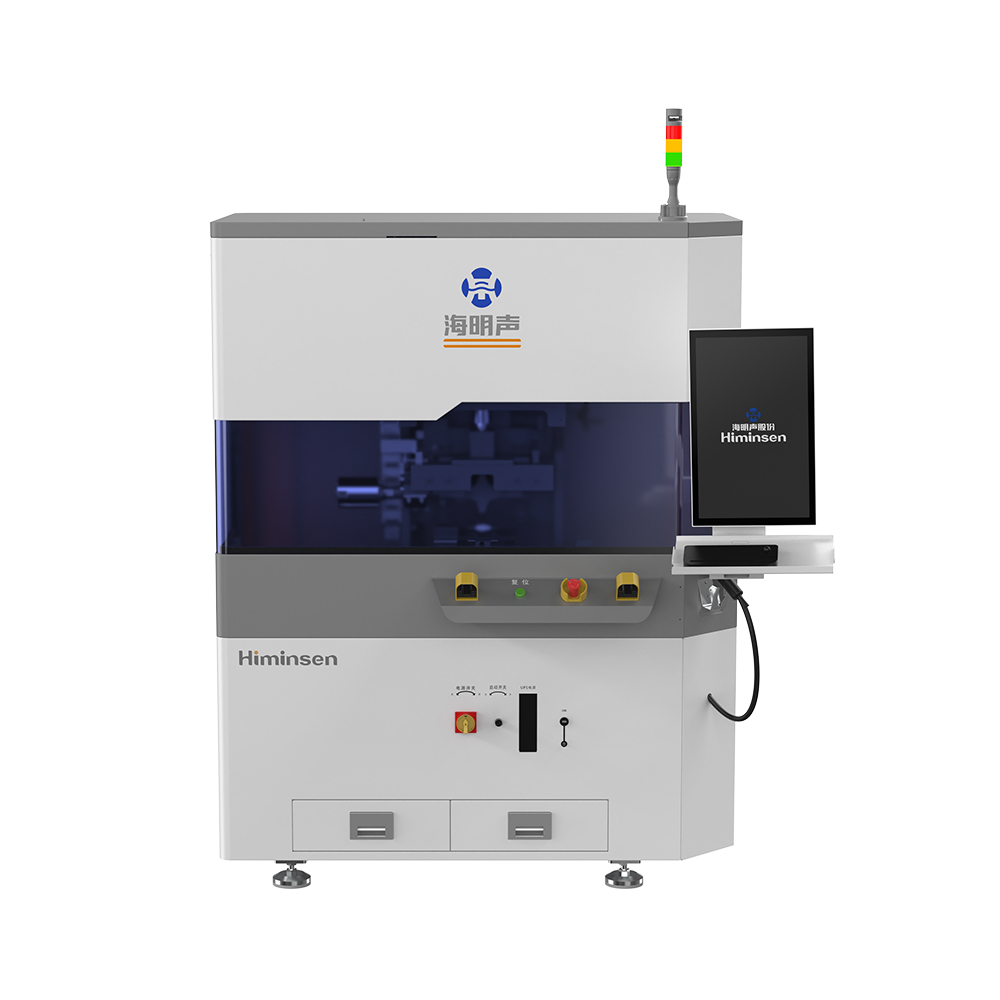
The Three Core Components of an Ultrasonic Welding System
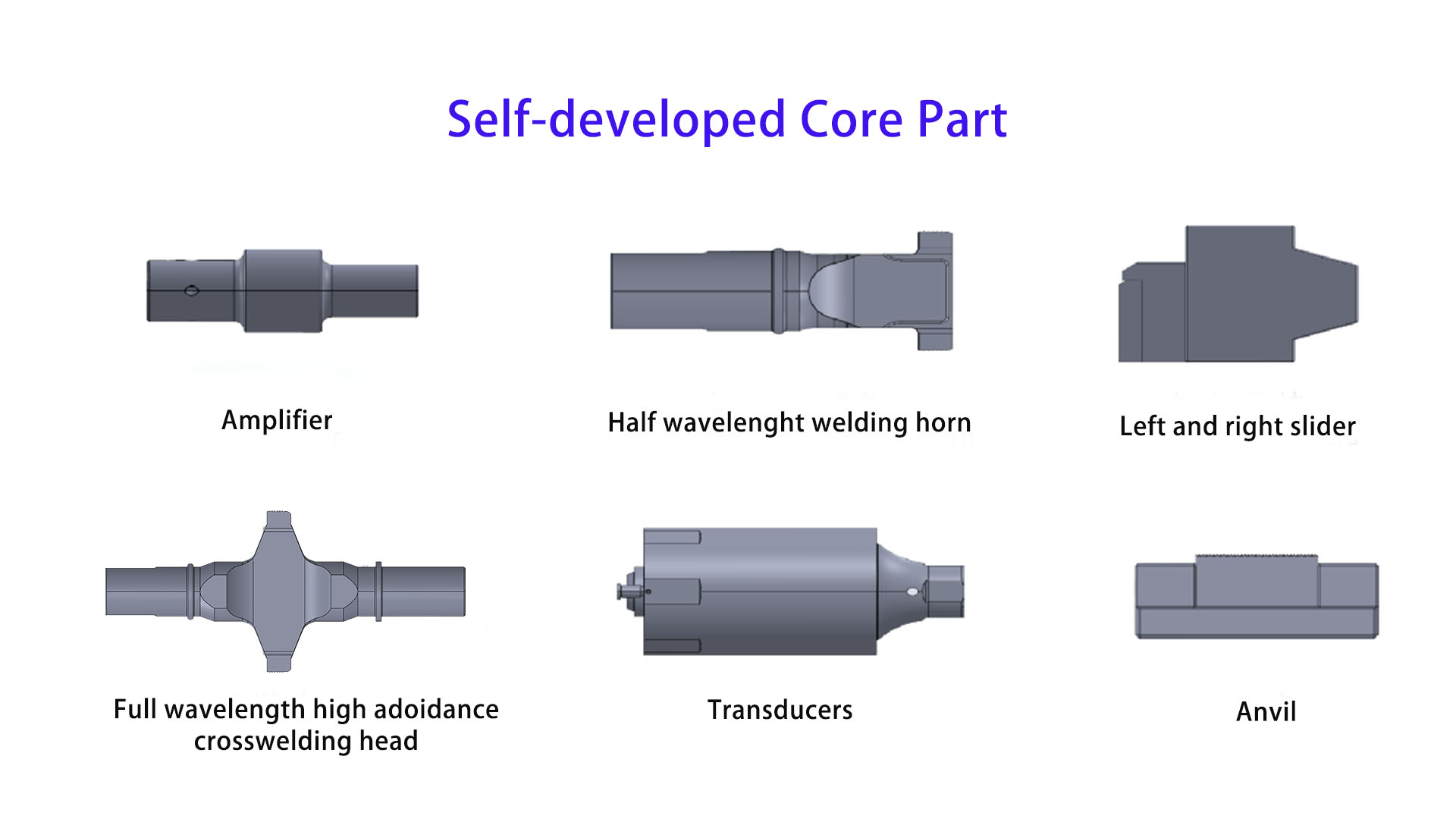
Welding horn
Let’s compare the “transducer” to the heart (converting electrical energy into high-frequency mechanical vibration), the “horn” to the throat (amplifying vibration amplitude), the “welding head” (upper welding die) to the palm (transferring energy to wire harnesses), and the “lower welding die” to the “base pad” which plays a supporting role.
01. Transducer: The “Heart” of the Welding Machine, Converting Electrical Energy into “Vibration Energy”
If an ultrasonic welding machine were an “energy conversion factory”, the transducer would be the “heart” of the factory. It is responsible for converting external electrical energy into the “high-frequency mechanical vibration” that is most needed for welding. Without it, all subsequent welding operations would be impossible.
Core Function
Through the internal piezoelectric ceramic material (a special material that can convert electrical energy and mechanical vibration into each other), it converts 220V/380V electrical energy into high-frequency micro-vibrations of tens of thousands of times per second (common frequencies range from 15kHz to 70kHz).
Why It Matters
This high-frequency vibration is the “source of welding”. Later, it is relied on to make the molecules of workpieces such as wire harnesses rub rapidly and generate heat, ultimately achieving “welding”. Just like the heart pumps blood to the whole body, the transducer also transmits “energy” to the next component.
02. Horn: The “Throat” of the Welding Machine, “Amplifying and Strengthening” Small Vibrations
The vibration amplitude output by the transducer is very small (usually only a few microns), which is not strong enough for direct welding. This is where the horn comes into play. Like the “throat” of the machine, it can “amplify” the small vibrations while ensuring no energy loss.
Core Function
Through a special conical/stepped structure, it amplifies the small amplitude transmitted by the transducer to the range required for welding. At the same time, it can “calibrate the vibration direction” to ensure that the vibration is transmitted vertically without deviation.
Why It Matters
The amplitude directly affects the welding effect. If the amplitude is too small, the frictional heat of the workpiece is insufficient, resulting in weak welding. If the amplitude is too large, it will damage the workpiece (such as breaking the insulation layer of the wire harness). The horn is like a “volume controller” that accurately controls the “strength” of the vibration.
03. Welding Head + Lower Welding Die: The “Palm” Transmits Energy, and the “Anvil” Stabilizes the Workpiece
With the “heart” supplying energy and the “throat” amplifying it, the final step is to transmit the energy to the workpiece. This requires the cooperation of the welding head (upper welding die) and the lower welding die. One is like a “palm” and the other is like an “anvil”, each with a clear division of labor.
HIMINSEN
Welding Head: Like a “Palm”, “Patting” Vibration Energy onto the Workpiece
The welding head is the component that directly contacts the workpiece. Its shape is customized according to the welding object (such as wire harnesses, terminals), with common types including flat welding heads and grooved welding heads. Its role is like a human “palm”, accurately transmitting the amplified vibration from the horn to workpieces such as wire harnesses.
Core Function
It “uniformly transmits” high-frequency vibration to the contact surface of the workpiece, making the local part of the workpiece rub rapidly to generate heat and achieve welding. At the same time, through its customized shape, it adapts to different workpieces (for example, multi-strand wire harnesses require grooved welding heads to ensure each wire can bear force).
Lower Welding Die: Like an “Anvil”, Steadily Holding the Workpiece Without Shaking
During welding, it is not enough to just have the “palm” exert force; a “stable support” is also needed. The lower welding die is this “anvil”. It is fixed on the machine table and is responsible for holding the workpiece to prevent it from shifting during high-frequency vibration.
Core Function
Through a groove/plane matching the welding head, it fixes the position of the workpiece (for example, the wire harness should be placed in the slot of the lower welding die). At the same time, it absorbs part of the excess vibration, reducing the overall shaking of the machine and ensuring welding accuracy.
Would you like me to create a visual diagram label document for these three core components? It can match the analogies and functions in the text, making it easier for readers to understand the structure and working principle of the welding system at a glance.
📩For more information, please feel free to contact us:
📧Email: delin@himinsens.com
📞Tel: +8618938694287
📍Address: 101, Building 8, Jin’an Building, Shangcun, Gongming Street, Guangming District, Shenzhen, China